



Diaphragm Pump
#1 AODD Pump Sizing Guide: How to Choose the Right Diaphragm Pump

Dec
aodd pump sizing guide: how to choose the right diaphragm pump
AODD pump sizing guide information is essential for ensuring you select the correct pump for your application. Oversized pumps waste air, increase operating costs, and wear prematurely – while undersized pumps stall, lose flow, and fail faster.
Whether you’re pumps chemicals, wastewater, oils, slurries, food products or solvents, using the correct AODD pump sizing principles ensures long-term reliability and efficiency.
This AODD pump sizing guide explains how to size a diaphragm pump correctly based on:
✔ Flow rate
✔ Discharge pressure
✔ Suction lift
✔ Viscosity
✔ Specific gravity
✔ Air supply
✔ Piping layout
✔ Material compatibility

AODD Pump Sizing Guide: Why Getting The Size Right Matters
Selecting the correct pump size affects:
-
Pump life
-
Flow consistency
-
Chemical compatibility
-
Energy (air) efficiency
-
Downtime prevention
-
Total cost of ownership
Incorrect sizing is one of the leading causes of premature diaphragm wear and pump failure.
Step 1: Determine Required Flow Rate (L/min or m³/hr)
Flow is the primary sizing factor.
AODD pumps have a wide operating window, but every pump has an optimal range.
How to calculate required flow
- Process demand (e.g., 50 L/min)
- Batch transfer time required
- CIP or flushing flow requirements
- Peak vs. continuous duty flow
Tip: Always size an AODD pump with 20-30% flow headroom.
Browse our range of AODD Pumps
Step 2: Calculate Total Discharge Pressure
AODD pumps operate based on air pressure vs discharge pressure.
To size correctly, you must calculate Total Dynamic Head (TDH).
TDH =
✔ Static discharge height
✔ Friction losses in pipework
✔ Filter/strainer pressure drops
✔ Fluid density impact
✔ Required downstream pressure
Your pump must provide at least equal discharge pressure to overcome system resistance.
For more detail on pump testing and performance standards, refer to the ISO Technical Committee for Pumps (ISO/TC 115)

Step 3: Understand Suction Lift Requirements
AODD pumps are self-priming – but only within limits.
Types of suction conditions:
- Flooded suction (best for pump life)
- Dry suction lift (self-priming, but slower)
- Submerged / sump draw
General suction limits:
- Water: 5-6 metres max
- Viscous liquids: less
- Hot liquids: significantly less
- Solvents: varies by vapour pressure
If suction lift exceeds recommended levels → the pump may cavitate.
Step 4: Consider Fluid Viscosity and Specific Gravity
Viscosity dramatically affects flow.
Low viscosity (1-100 cP):
Most AODD pumps perform at full chart values.
Medium viscosity (100-1,000 cP):
Expect 10-30% flow reduction.
High viscosity (1,000-10,000+ cP):
Use oversized pumps or flow-cycling setups.
Viscosity effect tables are available from EPA’s industrial process guidance
Step 5: Check Air Supply requirements
Air system limitations cause stalling, inconsistent flow, and restricted output.
AODD pumps require:
- Correct air pressure (PSI/bar)
- Air flow (SCFM/m³/hr)
- Clean, dry air
OSHA compressed air safety guidelines
Ensure your air system can deliver:
- Max pressure needed
- Minimum flow demand
- stable supply across cycles
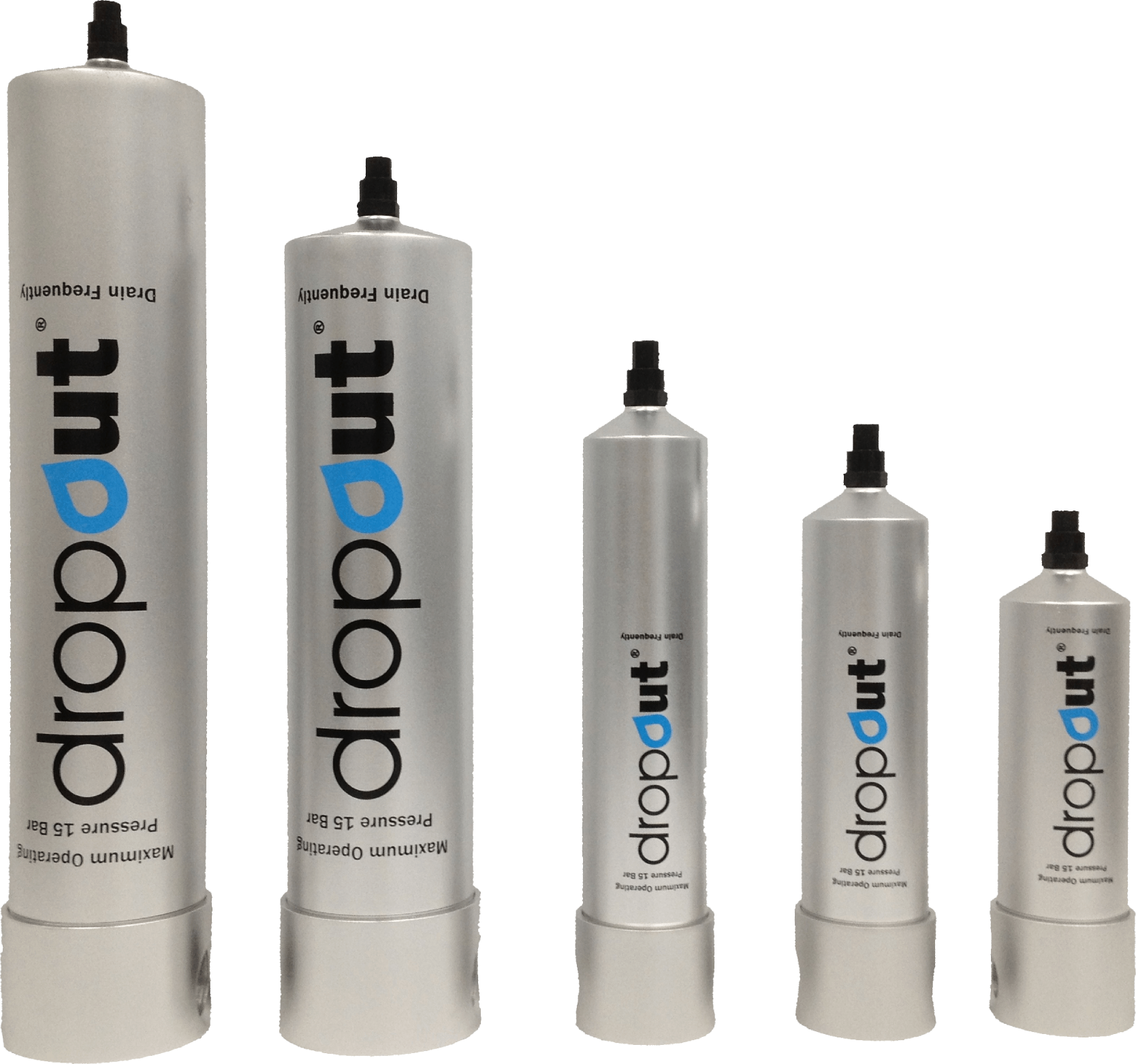
Our Dropout Compressed Air Filters can help ensure the quality of your air
Step 6: Select Correct Connection Size & Piping Layout
If piping is undersized:
- Flow drops
- Pump cycles harder
- Pulsation increases
- Air consumption rises
General rule:
Never use pipe smaller than pump port size.
Avoid:
✘ Long, restrictive runs
✘ Sharp elbows
✘ Undersized filters
✘ Collapsing suction hoses
Use:
✔ Smooth-bore hoses
✔ Oversized piping on suction side
✔ Minimal fittings
Step 7: Select Correct Diaphragm Material
Material selection impacts lifespan and reliability more than any other component.
“Diaphragm Materials Explained: PTFE vs Santoprene vs EPDM vs Nitrile”

Step 8: Consider ATEX Requirements (If Required)
If pumping flammable solvents or operating in hazardous zones, ATEX-rated pumps are mandatory
Contact us to find out how we can assist with your ATEX requirements
Step 9: Always Check performance curves
Every AODD pump has a unique performance curve showing:
- Flow vs air pressure
- Flow vs discharge pressure
- Air consumption
- Efficiency
Never size a pump without checking the manufacturer’s curves.
Example

Example AODD Pump Sizing Scenario
Application: Chemical transfer
Flow required: 80 L/min
Discharge height: 3m
Line losses: 0.6 bar
Fluid: Solvent (~1.2 SG)
Viscosity: 50 cP
Air supply: 6 bar available
Pump recommendation:
A 1″ AODD pump with PTFE diaphragms, flow rating ~ 100 L/min at 5-6 bar air pressure.
Conclusion: Use this AODD Pump Sizing Guide for Reliable Selection
Correct pump sizing prevents:
✔ Downtime
✔ Premature diaphragm failure
✔ Excessive air consumption
✔ Poor flow rates
✔ Safety issues
Using this AODD pump sizing guide, you can accurately determine flow, pressure, suction, viscosity, and diaphragm material requirements for any application.
For expert help selecting the correct pump
Contact the Diaphragm Pumps Technical Team